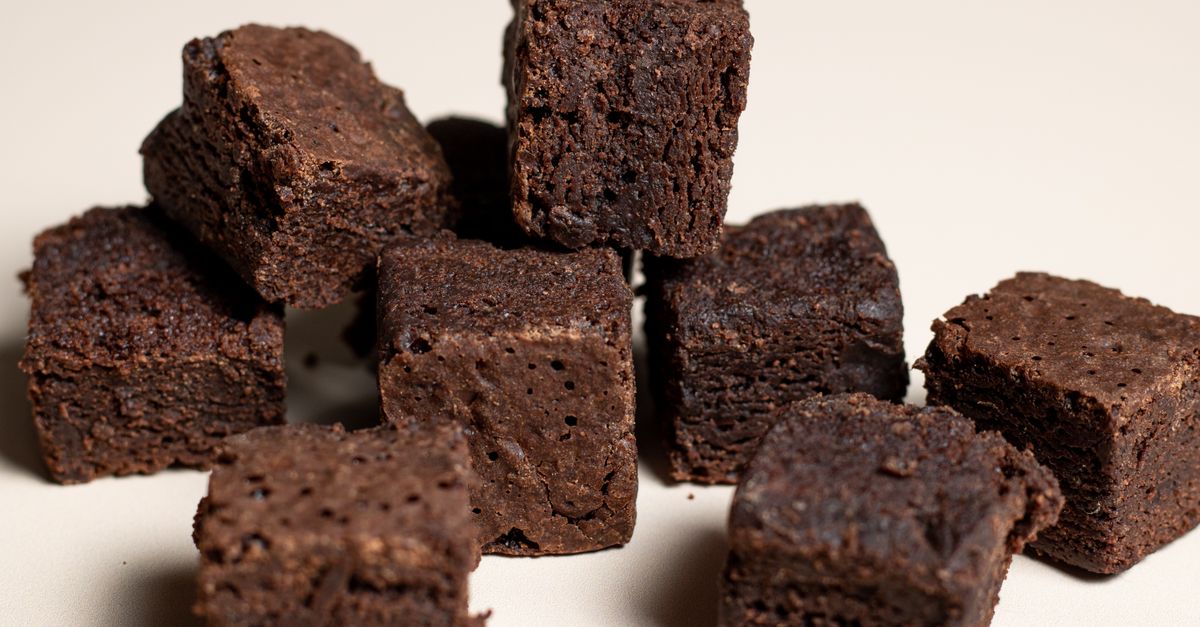
Why Your Homemade Brownies Are Cakey (And The Simple Shifts That Guarantee Fudgy Perfection Every Time)
Baking brownies at home should be a joyous, straightforward affair, yielding a pan of dense, intensely chocolatey squares with that irresistible crackle top. Yet, for so many of us, the reality falls short. We follow recipes diligently, measure with care, and still end up with a batch that’s, well, cakey. It’s a texture that belongs in a chocolate cake, not in a brownie that promises fudgy bliss. I’ve been there countless times, pulling a pan from the oven only to cut into a crumbly, almost airy disappointment, wondering where I went wrong.
Over the years, after countless experiments, ruined batches, and a deep dive into the science of baking, I’ve realized that the path to fudgy perfection isn’t about some secret ingredient or a high-tech oven. It’s about understanding a few fundamental, often overlooked, principles that subtly shift your brownie’s destiny from cakey to sublime. The mistake I see most often, and one I made for years, is treating brownie batter like cake batter. They are fundamentally different, and demanding fudgy results requires a different approach. What changed everything for me was recognizing that achieving that dense, moist chew isn’t just a happy accident; it’s a deliberate choice in your technique and ingredient ratios. It’s about minimizing aeration, maximizing fat, and controlling moisture, rather than chasing a light, fluffy rise.
Key Takeaways
- Prioritize fat over flour and leavening to achieve a dense, fudgy texture.
- Melted butter and cocoa powder offer superior flavor and texture compared to baking chocolate.
- Minimize air incorporation during mixing to prevent a cakey crumb.
- Underbaking slightly and chilling brownies are crucial for maximum fudginess and clean cuts.
The Overlooked Fat-to-Flour Ratio: More Than Just a Little Butter
When most recipes call for a fudgy brownie, they’re inherently asking for a higher fat content relative to flour. This might sound obvious, but the degree to which you commit to this ratio is often what separates truly fudgy from merely dense. For years, I approached brownie recipes as if they were a close cousin to cake, which meant I instinctively gravitated towards a roughly equal amount of fat (butter/oil) and flour. The result? A perfectly acceptable, but undeniably cakey, brownie.
What I discovered, through trial and error, is that for true fudginess, your fat content should noticeably outweigh your flour content. Think 1.5 to 2 parts fat for every 1 part flour. This isn’t just about adding more butter, though that helps. It’s about recognizing that flour contributes to structure, which in excess, can create a lighter, more airy, cake-like crumb. Fat, on the other hand, inhibits gluten development, interferes with protein coagulation, and enrobes flour particles, all contributing to a tender, moist, and dense texture. It essentially lubricates the batter, preventing it from drying out and firming up too much during baking.
In my own kitchen, I experimented with a standard brownie recipe that called for 1 cup of flour and 1 stick (1/2 cup) of butter. When I adjusted it to 1 cup of flour but increased the butter to 1.5 sticks (3/4 cup) or even 2 sticks (1 cup) with a corresponding slight reduction in sugar to maintain sweetness balance, the difference was profound. The brownies became significantly denser, richer, and had that tell-tale moist chew I was craving. You’re not just adding flavor; you’re fundamentally altering the structural integrity of the brownie. It’s a deliberate shift from a cake-like structure to a more confectionary, almost candy-bar-like density. This isn’t a small tweak; it’s a foundational change that dictates the final texture.
The Melted Butter & Cocoa Powder Advantage: Flavor and Texture Synergy
Many brownie recipes call for melting unsweetened or bittersweet baking chocolate. While this can yield delicious results, it often comes with a subtle lean towards a more ‘cakey’ outcome for the home baker, primarily due to the cocoa butter content and the emulsification challenges. In my experience, for consistently fudgy brownies with an intense chocolate flavor, a combination of melted butter and good quality cocoa powder is far superior and easier to control.
Here’s why: When you melt butter, you’re introducing pure fat, unadulterated by the solids found in baking chocolate. This pure fat coats the flour, preventing excessive gluten development which leads to a softer, denser crumb. Cocoa powder, especially Dutch-processed, provides deep, rich chocolate flavor without adding extra fat (cocoa butter) that can sometimes throw off the delicate balance when combined with melted butter. Moreover, the lack of added emulsifiers in cocoa powder means you have more control over the texture. When you mix cocoa powder directly into hot melted butter, it ‘blooms,’ intensifying its chocolate flavor significantly.
I vividly remember a batch where I used a high-quality bittersweet chocolate bar, melted it perfectly, and still ended up with a slightly tougher, less yielding brownie than when I switched to my melted butter and cocoa powder method. The cocoa powder brownies were unequivocally more fudgy, with a velvety mouthfeel and a richer, more pronounced chocolate taste that coated the palate. The key is to melt the butter completely, then stir in the cocoa powder until fully incorporated before adding your sugars and eggs. This blooming process extracts maximum flavor, giving you a deeper chocolate profile without the structural pitfalls of excess cocoa butter from baking chocolate. This simple switch is a powerful lever for both flavor and texture.
Minimizing Aeration: The Enemy of Fudgy Perfection
If you’re making a cake, you want air. You cream butter and sugar until light and fluffy, you whip eggs until they’re voluminous, and you sift dry ingredients to prevent clumping and add air. For brownies? This is the absolute opposite of what you want for a truly fudgy texture. Excess air incorporation is, without a doubt, the leading cause of cakey brownies.
Think about it: air creates lift, and lift creates a light, spongy texture. While delightful in a cupcake, it’s disastrous for a brownie that should be dense and almost gooey. When I first started baking, I would enthusiastically beat my eggs and sugar until pale and fluffy, then mix in my dry ingredients with equal vigor. The result was always a brownie that rose too much, had a fine, open crumb, and lacked that signature chew.
The game-changer for me was adopting a gentler, almost minimalist, mixing technique. When combining wet ingredients (melted butter, sugar, eggs, vanilla), whisk just until combined. You’re looking for uniformity, not volume. As soon as the eggs are fully incorporated and the sugar begins to dissolve, stop. When adding dry ingredients (flour, cocoa powder, salt), fold them in barely until no streaks of flour remain. Overmixing develops gluten, which also contributes to a chewier, more elastic, and ultimately cakey texture. You want a thick, somewhat lumpy batter, not a perfectly smooth, airy one. My fudgiest batches always came from a batter that looked a little ‘messy’ and under-mixed, with a surprising density even before baking. This deliberate restraint in mixing is a crucial step that directly impacts the final texture, keeping those air bubbles at bay and ensuring a dense, indulgent treat.
The Subtle Art of Underbaking: Don’t Bake Them Until They’re ‘Done’
This is perhaps the most counter-intuitive, yet most critical, piece of advice for achieving fudgy brownies. You do not want to bake your brownies until a toothpick inserted into the center comes out clean. If you wait for that, you’ve gone too far. A clean toothpick means a dry, cakey brownie. This was a concept that took me a long time to accept because every other baking instruction screams, “test for doneness!”
For truly fudgy brownies, you want to pull them from the oven when a toothpick inserted into the center still has moist crumbs clinging to it, or even a slight smear of wet batter. The edges should be set, and the top should have that characteristic shiny, crackly crust. The center, however, should still look slightly undercooked and jiggly. Why? Because brownies continue to cook from residual heat long after they come out of the oven – a phenomenon known as “carryover cooking.” If you bake them until they’re perfectly set in the oven, by the time they cool, they will be overcooked and dry.
I once pulled a batch from the oven convinced they were too raw. The center still looked quite wet. My instinct screamed to put them back in. But I resisted, remembering the advice to trust the process. After cooling completely (another critical step, detailed next), those were some of the most perfectly fudgy brownies I had ever made. They were gooey, dense, and moist, exactly what I had been striving for. Learning to pull them at that precise, slightly-too-early stage requires a leap of faith, but it’s a difference-maker. When in doubt, err on the side of underbaking. A slightly underbaked brownie is a fudgy brownie; an overbaked brownie is just a sad, dense cake.
The Patience of Chilling: The Secret to Set Fudginess and Clean Cuts
Once you’ve mastered the art of slightly underbaking, the next step is perhaps the most challenging: patience. To achieve maximum fudginess and, crucially, those perfectly clean, neat squares, you must cool your brownies completely, preferably in the refrigerator, before cutting them. This is where many home bakers (myself included, for far too long) falter. The allure of warm, gooey brownies straight from the pan is strong, but yielding to it guarantees crumbly edges and a less-than-optimal fudgy texture.
Warm brownies are essentially molten chocolate. The fats and sugars are still soft and unset. If you try to cut them, they will squish, crumble, and leave a trail of delicious, yet messy, destruction. Cooling, especially chilling, allows the fats to solidify, the sugars to crystalize, and the structure of the brownie to firm up significantly. This process transforms that slightly jiggly, moist center into the dense, rich fudgy texture you’re aiming for. It’s similar to how a perfectly set custard or cheesecake needs time to firm up in the fridge.
I used to impatiently cut into my brownies after 30 minutes on the counter, only to curse at the uneven, ragged edges and the sticky mess. Then, I started a new routine: after 30-60 minutes at room temperature, I’d transfer the entire pan, uncovered, to the refrigerator for at least 2-3 hours, or even overnight. The difference was night and day. The brownies emerged perfectly firm, allowing for laser-sharp cuts with a hot knife, and the texture was undeniably more dense and fudgy. The wait is worth every single moment. This chilling step isn’t just about presentation; it’s an integral part of developing that truly decadent, fudgy mouthfeel. Trust me, your patience will be richly rewarded.
Frequently Asked Questions
Q: Can I use oil instead of butter for fudgy brownies?
A: Yes, you can. Oil (like vegetable or canola) will yield a very moist, dense, and even chewier brownie because it is 100% fat and remains liquid at room temperature, preventing the brownie from firming up too much. However, butter often provides a richer, more complex flavor. A combination of both can also work wonders for balancing flavor and texture.
Q: Why do my brownies have a dry, crumbly edge but a fudgy center?
A: This is a classic sign of slight overbaking, especially around the edges, or an oven with hot spots. Ensure you’re pulling them when the center is still quite moist and jiggly. You might also try rotating the pan halfway through baking, or lowering your oven temperature slightly and baking for a longer duration to promote more even cooking.
Q: My brownie recipe calls for baking powder. Should I omit it for fudginess?
A: For truly fudgy, dense brownies, you should significantly reduce or even omit baking powder (and baking soda, unless your recipe has a strong acidic component to react with soda). Leavening agents create air and lift, which is the enemy of fudginess. A very small pinch might be acceptable for a slightly less dense brownie, but for pure fudge, less is more (or none at all).
Q: How can I tell when my brownies are perfectly underbaked?
A: Look for a shiny, crackly top and set edges. When you gently jiggle the pan, the very center should still look a bit soft and perhaps wobble slightly, but not like liquid batter. A toothpick inserted into the center should come out with moist crumbs, not wet batter, and definitely not clean. This visual and tactile cue is more reliable than a timer alone.
Q: What’s the best way to cut fudgy brownies cleanly?
A: Ensure your brownies are completely chilled, ideally in the refrigerator for at least 2-3 hours or overnight. For the cleanest cuts, use a sharp, thin-bladed knife and wipe the blade clean with a damp cloth after each cut, or run it under hot water and wipe dry before each cut. This prevents sticking and ensures crisp edges.
Q: Can I add extra chocolate chips for more fudginess?
A: Absolutely! Adding chocolate chips, especially after the batter is mixed and right before baking, can enhance the fudgy experience. As they melt, they contribute to the overall moistness and richness, creating pockets of gooey chocolate that are truly divine. Just be mindful not to overmix them into the batter.
Conclusion
Baking truly fudgy brownies at home doesn’t have to be a mystery. It’s a deliberate dance between ingredients and technique, a gentle persuasion of the batter to yield to density rather than rise. By understanding and implementing these non-obvious shifts—prioritizing fat over flour, embracing melted butter and cocoa powder, minimizing aeration, pulling them from the oven at that precisely underbaked moment, and exercising the supreme patience of chilling—you’ll move beyond cakey disappointments to a consistent, deeply satisfying fudgy perfection. Embrace these principles, trust the process, and prepare to elevate your homemade brownie game to an entirely new level of delicious decadence. Your next batch of brownies isn’t just dessert; it’s a testament to intentional baking.
Written by David Miller
Productivity & Lifestyle Design
An experienced lifestyle columnist who crafts accessible advice for improving daily routines and personal spaces.
You Might Also Like

Why Your Home Still Feels Stale (Even After Cleaning) — And What Actually Works for Real Freshness
Discover why your home still smells stale after cleaning and learn practical, non-obvious strategies for true, lasting freshness.
Why Your Homemade Cookies Are Flat, Not Puffy (And The Simple Shifts That Guarantee Perfect, Puffy Results Every Time)
Ever wonder why your homemade cookies spread too thin? Discover the overlooked factors and simple shifts for achieving perfectly puffy, soft cookies.
Why Your Homemade Sauces Are Greasy, Not Velvety (And The Pro Secrets for Silky Perfection Every Time)
Struggling with greasy, separated sauces? Learn the pro secrets to emulsify like a chef and achieve velvety perfection every time.